.png)


If your association has ever felt stuck in vendor frustration (missed scope items, repeat problems, unclear timelines), you’re not alone. Many associations experience these same challenges, finding it difficult to hold vendors accountable and ensure consistent performance.
The good news is that boards don't have to become industry experts to get better results from their vendors. Instead, stronger outcomes start with a clearer structure for setting expectations and maintaining oversight.
One way to do this is through vendor scorecards. These provide a straightforward method to evaluate vendors, allowing you to quickly determine whether they are meeting expectations at a glance.
By implementing a basic method like this, your board can see real progress without a drastic increase in workload.
Defining Expectations: Setting the Scope for Vendor Services
Most vendor issues arise from miscommunication, particularly when expected outcomes are not delivered. To prevent these challenges, it's vital that your board of directors and the vendor reach a clear agreement on the full scope of service before any work is officially scheduled.
What Should Be Included in the Scope of Service?
- Services Included: Specify all tasks and responsibilities the vendor is expected to perform.
- Service Not Included: Clarify excluded items so that any extras are clearly understood by both parties.
- Frequency: Determine how often tasks will be completed (weekly, biweekly, or seasonally).
- Quality Standards: Define what “good” looks like to ensure work meets your expectations.
- Response Expectations: Establish timelines for how quickly issues should be acknowledged and addressed.
- Extra Work Process: Set guidelines for quoting and approving additional tasks to avoid surprises.
- Communication Method: Decide who will contact whom and how updates and information will be shared.
Documenting Expectations
If your HOA works with a management company, your manager can often help clarify scopes and ensure that expectations are properly documented. For self-managed associations, using this checklist can immediately improve clarity with vendors.
By documenting this information in a location that is easy to access and in a format that is simple to understand, your board will always know what to expect from each vendor and what constitutes an issue if expectations are not met.
Creating and Using a Vendor Scorecard
Once you have a clear definition of what you expect from your vendor, the next step is to consistently track their performance.
It's helpful to keep your vendor scorecard in the same location as your scope of service. This makes it easy to reference expectations and compare them with actual results. A simple spreadsheet works well and can be updated over time as you gather more information.
How to Rate Vendors
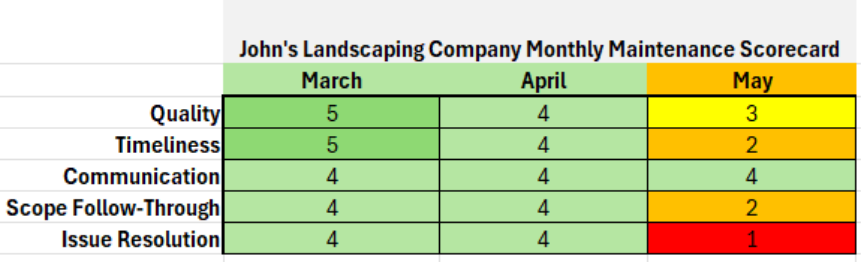
After each service is completed, rate your vendor in the following categories on a scale from 1 to 5:
- Quality: Does the work meet expectations?
- Timeliness: Are tasks completed when promised?
- Communication: Are updates clear and responsive?
- Scope Follow-Through: Are they doing what the contract states?
- Issue Resolution: Do problems get fixed without repeated reminders?
Noting Other Observations
In addition to scores, include brief notes on:
- What’s working
- What needs improvement
- What you expect by the next check-in
Keep the process simple and focus on consistency. Over the course of two or three months, you will begin to notice patterns in vendor performance. These patterns are essential for making informed decisions about your vendors.
By providing vendors with a measurable framework, you shift discussions from subjective opinions to concrete outcomes, leading to better accountability and results.
Tips for Effective Use of Your Vendor Scorecard
1. Share Expectations Early
Begin your vendor scorecard process at the start of the season whenever possible. Let your vendors know upfront that their performance will be evaluated using the scorecard. By establishing this practice early, you provide vendors with clear expectations, which they often appreciate.
2. Recognize What Is Working
When you notice improvements or positive results, acknowledge them promptly. Even a brief comment such as, “We noticed improvement at the entrance,” can have a meaningful impact. Positive feedback encourages vendors to continue behaviors that meet or exceed expectations.
3. Provide Specific Feedback When Issues Arise
Instead of making general statements like, “The landscaping looks bad,” offer detailed feedback.
For example:
- The entrance beds had visible weeds for two weeks.
- Bare areas by the mailbox cluster were not addressed.
- Irrigation overspray is hitting the sidewalk at the corner of South Dr.
Specific comments help vendors understand exactly what needs attention, leading to better outcomes and minimizing defensiveness.
4. Determine Actions for Low Scores
To maximize the effectiveness of your scorecard, connect low scores to specific actions. Possible responses include:
- Requiring corrections within a set timeframe
- Requesting a plan for improvement
- Renegotiating the scope or schedule
- Seeking alternate bids if performance remains unsatisfactory
By linking feedback to clear next steps, you ensure that the scorecard drives meaningful improvements and accountability.
How Management Supports Vendor Scorecards
When you work with a management team, much of the responsibility for maintaining vendor scorecards can be taken off your board’s plate.
If your community association works has a community association manager (CAM), consider discussing the implementation of vendor scorecards with them. CAMs can assist by collecting and providing the necessary information for your board to accurately complete the scorecards. In some cases, you may trust your CAM to fill out and share the scorecards directly with your board.
Your management company may already have a similar process in place, which your CAM can share and adapt for your needs. The goal is to find practical ways to make management work for your board.
Keep in mind that your management team is also considered a vendor. Your board should maintain a scorecard to evaluate their performance. This is one you should complete independently.
If you’re working with a capable management team, they will appreciate the feedback from the scorecard, as it provides an opportunity to address any issues early. However, if you encounter resistance or ongoing disputes when offering feedback, it may indicate that your board should start considering other management options.
Final Thoughts
Spring represents a time of forward movement and renewed energy. By establishing clearer scopes of work and utilizing an easy-to-understand scorecard, your board can shift its approach from merely reacting to problems to proactively planning and executing improvements. This momentum helps ensure that your community’s needs are anticipated and addressed more efficiently, creating a foundation for ongoing success.

.png)